Showing posts with label business. Show all posts

The Differentiated Workforce: Transforming Talent into Strategic Impact Review

The Differentiated Workforce: Transforming Talent into Strategic Impact
Average Reviews:

(More customer reviews)
Are you looking to buy The Differentiated Workforce: Transforming Talent into Strategic Impact? Here is the right place to find the great deals. we can offer discounts of up to 90% on The Differentiated Workforce: Transforming Talent into Strategic Impact. Check out the link below:

>> Click Here to See Compare Prices and Get the Best Offers

The Differentiated Workforce: Transforming Talent into Strategic Impact Review
Brian Becker, Mark Huselid, and Richard Beatty shares their thoughts about how to solve the various strategic challenges that line managers now face. "Specifically, it is about making senior managers more successful at executing their strategy" by putting strategy, not people, first. "For most organizations, that success has an important talent dimension. When it comes to workforce strategy, our approach requires that line managers define success but that HR professionals deliver the solution. This requires a new perspective on workforce strategy for both." That said, the transformation they recommend requires thinking more broadly (perhaps even counter intuitively) about the respective roles of line managers, HR, and the workforce because all of them must be centrally in any change initiatives.
With regard to this book's title, Becker, Huselid, and Beatty explain that "there are four key domains that distinguish a differentiated approach from a more conventional (undifferentiated) approach to workforce management: a focus on equity instead of equality; a focus on engaging the right employees, not necessarily all employees; an emphasis on hiring choice employees, not becoming an employer of choice; and finally, a focus on earned increases (i.e. increased responsibilities and compensation." More specifically, strategic talent becomes a competitive advantage (equity), those with strategic talent fully understand how to acquire and retain customers as well as how to accelerate improvement of organizational performance (employee focus); strategic talent is retained and helps to attract and hire fewer but much better-qualified job candidates (employee of choice); and peak performers are generously (and appropriately) rewarded and remain whereas poor/mediocre performers are not rewarded and asked to vacate their strategic roles.
There at least two major reasons why workforce differentiation is so important to almost all organizations, whatever their size or nature may be. First, it can help them to achieve significant and verifiable strategic impact in their competitive marketplace. Also, it will address one of the greatest challenges now facing their senior-managers: How to get more workers positively and constructively engaged? Recent Gallup research indicates that only 29% of the U.S. workforce is positively engaged (i.e. loyal, enthusiastic, and productive) whereas 55% is passively disengaged. That is, they are going through the motions, doing only what they must, "mailing it in," coasting, etc. What about the other 16%? They are "actively disengaged" in that they are doing whatever they can to undermine their employer's efforts to succeed.
In their book, Becker, Huselid, and Beatty provide a cohesive, comprehensive, and cost-effective program by which achieve these two very important objectives, achieving significant and verifiable strategic impact in the competitive marketplace, and increasing the positive and productive engagement of workers at all levels and in all areas of operations. More specifically, they explain
1. How to put strategy, not people, first
2. How to link strategic capabilities to workforce strategy
3. How to identify and evaluate strategic positions
4. How to establish leadership accountability for workforce success (e.g. the line manager's HR role)
5. How to design architecture for the differentiated workforce
6. How to develop and apply strategic workforce measures
My repetition of the word "how" is deliberate because Becker, Huselid, and Beatty devote most of their time and attention to explaining how to implement their various recommendations. They are diehard pragmatists, with an insatiable curiosity to know what works, what doesn't, and why. Their determination to focus on real-world issues, problems, and solutions is perhaps best illustrated by the detailed and surprisingly lively case study they provide in Chapter 7 (Pages 171-231) of how th4 American Hat Association created a differentiated workforce. Obviously, it would be a fool's errand to attempt to duplicate those initiatives without appropriate modification in another organization, even one in the healthcare field. It would also be a fool's mistake to ignore the lessons to be learned from this case study.
Those who share my high regard for this brilliant book are urged to check out Becker, Huselid, and Beatty's previously published The HR Scorecard: Linking People, Strategy, and Performance and The Workforce Scorecard: Managing Human Capital To Execute Strategy as well as Enterprise Architecture As Strategy: Creating a Foundation for Business Execution co-authored by Jeanne Ross, Peter Weill, and David Robertson, James O'Toole and Edward E. Lawler III's The New American Workplace, Dean Spitzer's Transforming Performance Measurement: Rethinking the Way We Measure and Drive Organizational Success, and Leadership Brand: Developing Customer-Focused Leaders to Drive Performance and Build Lasting Value co-authored by Dave Ulrich and Norm Smallwood.The Differentiated Workforce: Transforming Talent into Strategic Impact OverviewDo you think of your company's talent as an investment to be managed like a portfolio? You should, according to authors Becker, Huselid, and Beatty, if you're interested in strategy execution. Many companies fall into the trap of spending too much time and money on low performers, while high performers aren't getting the necessary resources, development opportunities, or rewards. In "The Differentiated Workforce", the authors expand on their previous books, "The HR Scorecard" and "The Workforce Scorecard", and recommend that you manage your workforce like a portfolio - with disproportionate investments in the jobs that create the most wealth. Based on two decades of academic research and experience working with hundreds of executives, "The Differentiated Workforce" gives you the tools to translate your talent into strategic impact.

Want to learn more information about The Differentiated Workforce: Transforming Talent into Strategic Impact?

>> Click Here to See All Customer Reviews & Ratings Now
Read More...

On Competition, Updated and Expanded Edition Review

On Competition, Updated and Expanded Edition
Average Reviews:

(More customer reviews)
Are you looking to buy On Competition, Updated and Expanded Edition? Here is the right place to find the great deals. we can offer discounts of up to 90% on On Competition, Updated and Expanded Edition. Check out the link below:

>> Click Here to See Compare Prices and Get the Best Offers

On Competition, Updated and Expanded Edition ReviewThis is a big ol' book - not just by volume, but by scope - and somewhere between Parts I (on developing strategy at the individual business level) and II (on the competitiveness of locations) it dawned on me that On Competition bears similarities to On Liberty, On Democracy in America, and On Human Nature*.
Like those classic tomes, this, too, cuts across disciplinary lines, tackles big subjects, and offers powerful insights into a wide variety of social problems.
Mr. Porter's been called "the world's most important business thinker" but, as I kept learning while reading Parts III and IV, his work touches on more than just business. His own big subjects are value creation and competition; the frameworks he's developed over the years have practical implications for organizations of all kinds. (think of government and non-government organizations)
You don't need to be a social scientist to understand the work. You *do* need to have a taste for academic-style writing and argument - and it'll no doubt help if you enjoy diagrams, activity maps, data tables, matrices, and other sorts of inserts. You should also have more than a passing interest in the interplay between business and society. If that's 'you', you'll find the articles in On Competition richly rewarding.
Maybe now more than ever. I think the book's most important message is that competition has the "staggering power to make things better - both for companies and for society." What better time than the midst of an economic crisis to learn that?*by John Stuart Mill, Alexis de Tocqueville, and E.O. Wilson, respectivelyOn Competition, Updated and Expanded Edition Overview
For the past two decades, Michael Porter's work has towered over the field of competitive strategy. On Competition, Updated Edition brings together more than a dozen of Porter's landmark articles from the Harvard Business Review. Five are new to this edition, including the 2008 update to his classic "The Five Competitive Forces That Shape Strategy," as well as new work on health care, philanthropy, corporate social responsibility, and CEO leadership.
This collection captures Porter's unique ability to bridge theory and practice. Each of the articles has not only shaped thinking, but also redefined the work of practitioners in its respective field. In an insightful new introduction, Porter relates each article to the whole of his thinking about competition and value creation, and traces how that thinking has deepened over time.
This collection is organized by topic, allowing the reader easy access to the wide range of Porter's work. Parts I and II present the frameworks for which Porter is best known frameworks that address how companies, as well as nations and regions, gain and sustain competitive advantage. Part III shows how strategic thinking can address society's most pressing challenges, from environmental sustainability to improving health-care delivery. Part IV explores how both nonprofits and corporations can create value for society more effeapplying strategy principles to philanthropy. Part V explores the link between Strategy and Leadership

Want to learn more information about On Competition, Updated and Expanded Edition?

>> Click Here to See All Customer Reviews & Ratings Now
Read More...

Schaums Outline of Intermediate Accounting I, Second Edition (Schaum's Outline Series) Review

Schaums Outline of Intermediate Accounting I, Second Edition (Schaum's Outline Series)
Average Reviews:

(More customer reviews)
Are you looking to buy Schaums Outline of Intermediate Accounting I, Second Edition (Schaum's Outline Series)? Here is the right place to find the great deals. we can offer discounts of up to 90% on Schaums Outline of Intermediate Accounting I, Second Edition (Schaum's Outline Series). Check out the link below:

>> Click Here to See Compare Prices and Get the Best Offers

Schaums Outline of Intermediate Accounting I, Second Edition (Schaum's Outline Series) ReviewI've only used this for three chapters and it's already more than paid for itself. It's great. It distills the ridiculous amount of content from my accounting text down to the essentials AND GIVES EXAMPLES in line. No, it won't replace your text, most likely, but it'll come darn close. I read this first, then my accounting text. Makes my comprehension level of my text skyrocket as I already have a general idea going in. Well worth its cost.Schaums Outline of Intermediate Accounting I, Second Edition (Schaum's Outline Series) Overview

Want to learn more information about Schaums Outline of Intermediate Accounting I, Second Edition (Schaum's Outline Series)?

>> Click Here to See All Customer Reviews & Ratings Now
Read More...

Applied .NET: Developing People-Oriented Software Using C# Review

Applied .NET: Developing People-Oriented Software Using C#
Average Reviews:

(More customer reviews)
Are you looking to buy Applied .NET: Developing People-Oriented Software Using C#? Here is the right place to find the great deals. we can offer discounts of up to 90% on Applied .NET: Developing People-Oriented Software Using C#. Check out the link below:

>> Click Here to See Compare Prices and Get the Best Offers

Applied .NET: Developing People-Oriented Software Using C# ReviewIf you have kept up with the .NET revolution, you have no doubt seen and read a lot of books on .NET and the .NET languages. Most of the books on C# deal with the basics of syntax with a couple of small samples applications. Very few, however, deal with any sort of real world situations.
While this book does cover a few of the basics, it is more focused on the people aspect. I feel this is an important, often overlooked, aspect of software development and the fact that it is overlooked is why so much software is hard to use.
If you are looking for a best practices book, this tome is not quite there. The same goes for a book strong on code. While you can use the CD to look at a good amount of sample code, the book is rather thin. This is not, however, the focus of the book; and, since so many other books cover this, the niche filled here is rather nice.
If I had to pick the proper audience for this book, there would be two categories: 1) Anyone who has ever had a piece of software fail as the end-users never bought in, and 2) anyone who wants to ensure this never happens. While it is not an excellent book, I have to laud the publisher for taking a chance on this subject matter selling. I hope it does.Applied .NET: Developing People-Oriented Software Using C# Overview

Want to learn more information about Applied .NET: Developing People-Oriented Software Using C#?

>> Click Here to See All Customer Reviews & Ratings Now
Read More...

Design and Launch an Online Social Networking Business in a Week (Entrepreneur Magazine's Click Starts) Review

Design and Launch an Online Social Networking Business in a Week (Entrepreneur Magazine's Click Starts)
Average Reviews:

(More customer reviews)
Are you looking to buy Design and Launch an Online Social Networking Business in a Week (Entrepreneur Magazine's Click Starts)? Here is the right place to find the great deals. we can offer discounts of up to 90% on Design and Launch an Online Social Networking Business in a Week (Entrepreneur Magazine's Click Starts). Check out the link below:

>> Click Here to See Compare Prices and Get the Best Offers

Design and Launch an Online Social Networking Business in a Week (Entrepreneur Magazine's Click Starts) ReviewI suppose I shouldn't have taken the book at its title. However, I expected a book on how to launch and design an online social networking business in a week. As in, day 1, you do this. Day 2, let's do this now. Day 3, and so on. What I got was a lovely overview in how to design and launch an online social networking business, but the ideas weren't laid out with enough concrete detail that if I hadn't had the technical expertise I did, well, I don't think I would have gotten as far as I had.
The software recommendations were woefully limited. There was no discussion of many free open source platforms out there, and the focus seemed to be on a "facebook" clone, rather than something unique and different.
It's a good book. A basic book. But one that I probably wouldn't use as the sole basis for my business, and I'm glad I picked up other books. Needs more meat, and probably a better time table, so someone could, indeed, launch their online social networking business in a week.Design and Launch an Online Social Networking Business in a Week (Entrepreneur Magazine's Click Starts) Overview

Want to learn more information about Design and Launch an Online Social Networking Business in a Week (Entrepreneur Magazine's Click Starts)?

>> Click Here to See All Customer Reviews & Ratings Now
Read More...

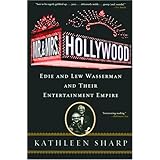
Mr. and Mrs. Hollywood: Edie and Lew Wasserman and Their Entertainment Empire Review

Mr. and Mrs. Hollywood: Edie and Lew Wasserman and Their Entertainment Empire
Average Reviews:

(More customer reviews)
Are you looking to buy Mr. and Mrs. Hollywood: Edie and Lew Wasserman and Their Entertainment Empire? Here is the right place to find the great deals. we can offer discounts of up to 90% on Mr. and Mrs. Hollywood: Edie and Lew Wasserman and Their Entertainment Empire. Check out the link below:

>> Click Here to See Compare Prices and Get the Best Offers

Mr. and Mrs. Hollywood: Edie and Lew Wasserman and Their Entertainment Empire ReviewThis is an important book. I've been waiting a long time for someone to report the insider details about how the Wassermans impacted U.S. politics as early as John Kennedy's election, how their mafia ties helped them control and skyrocket their entertainment empire, how Lew himself wheeled and dealed alternately like a king and a common criminal. This man had more federal investigations into his business than Enron, but he came out smelling like a rose every single time. Wonder why? The answers are here. Today, all of us - people around the world - have been shaped by the Hollywood-based entertainment media. How did this happen, and what does it mean to you and the future? For answers large and small, this is the one book to read.Mr. and Mrs. Hollywood: Edie and Lew Wasserman and Their Entertainment Empire Overview

Want to learn more information about Mr. and Mrs. Hollywood: Edie and Lew Wasserman and Their Entertainment Empire?

>> Click Here to See All Customer Reviews & Ratings Now
Read More...

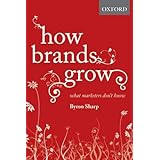
How Brands Grow: What Marketers Don't Know Review

How Brands Grow: What Marketers Don't Know
Average Reviews:

(More customer reviews)
Are you looking to buy How Brands Grow: What Marketers Don't Know? Here is the right place to find the great deals. we can offer discounts of up to 90% on How Brands Grow: What Marketers Don't Know. Check out the link below:

>> Click Here to See Compare Prices and Get the Best Offers

How Brands Grow: What Marketers Don't Know ReviewI've been a marketing and branding practitioner for 30+ years and I've read literally hundreds of the most 'notable' marketing texts from the leading academics in the business. This book was recommended by a highly respected researcher and if he hadn't mentioned it I probably would never have read the book.
Let me just say that we rarely get many marketers who are brave enough to take a contrarian's point of view on delicate marketing subjects. Byron Sharp takes on some of the real heavy hitters from HBS and other leading business schools and he does it with outstanding proprietary research and rich third party data. The book now has me wondering what other leading thought leaders I've been impressed by whose work is also suspect.
Other reviewers on these pages can give you specific examples of Sharp's notable findings. I can only give you my recommendation...buy and read this book!How Brands Grow: What Marketers Don't Know Overview

Want to learn more information about How Brands Grow: What Marketers Don't Know?

>> Click Here to See All Customer Reviews & Ratings Now
Read More...

Four Seasons: The Story of a Business Philosophy Review

Four Seasons: The Story of a Business Philosophy
Average Reviews:

(More customer reviews)
Are you looking to buy Four Seasons: The Story of a Business Philosophy? Here is the right place to find the great deals. we can offer discounts of up to 90% on Four Seasons: The Story of a Business Philosophy. Check out the link below:

>> Click Here to See Compare Prices and Get the Best Offers

Four Seasons: The Story of a Business Philosophy Review
Prior to reading Isadore Sharp's memoir, I checked out the biographical information about Four Seasons' founder, chairman, and CEO at the corporate Web site. Here is a portion of it that provides an excellent introduction to his book. As Sharp explains, "The reason for our success is no secret. It comes down to one single principle that transcends time and geography, religion and culture. It's the Golden Rule - the simple idea that if you treat people well, the way you would like to be treated, they will do the same. There was no vision, there was no grand dream," since the first Four Seasons - a modest motor hotel - opened in downtown Toronto. "But there has always been a consistent thread and it propels us forward today, as we continue to grow globally, and that's service." It may seem obvious that in the hotel business, service is a primary objective, but it is how that service is delivered that sets Four Seasons apart. "One way to characterize Four Seasons service would be to call it an exchange of mutual respect performed with an attitude of kindness." Defining and enforcing the company culture was one of four key strategic decisions made in the formative years of Four Seasons history. "I sat down with our communications experts and wrote down the fundamentals of our culture, which is based on the Golden Rule - to treat others as you wish to be treated...A lot of companies talk about having a culture, but we knew we had to walk the talk if we expected it to thrive in our hotels."
The company that was launched in 1961 with a 125-room motor hotel in Toronto now has arguably the most profitable as well as the highest rated luxury hotels in the world, more than 140 in more than 40 countries. Sharp's leadership deserves much of the credit. What I most appreciate about this book is the fact that, to the best of my knowledge, this is the first time that he has discussed so comprehensively and so specifically the process by which the Four Seasons organization has evolved over the past 46 years. There are so many highlights to cover and no one else is better qualified to do so. Here is a representative selection:
1. In 1963, Four Seasons opened its second hotel, Toronto's Inn on the Park. the sophisticated urban resort-style hotel was an instant success.
2. As indicated, throughout its history thus far, Four Seasons made four strategic decisions that formed the pillars of its business platform. The first was about quality. Small, central and well-appointed, with friendly, personalized 24-hour service, the first London hotel was just what people were seeking in the new age of international jet travel at the dawn of the 1970s. Rather than being all things to all people, Four Seasons would focus on one thing: being the best in each location, with medium-sized hotels of exceptional quality.
3. The second key strategic decision that formed the business platform was about service. True luxury is defined not by architecture or décor, but by service. So Four Seasons must make the quality of our service our distinguishing feature and a competitive advantage. In 1976, Four Seasons entered the US market with its first management contract, for San Francisco's 1913 landmark hotel, The Clift.
4. Then in 1979, the first Four Seasons-branded US hotel opened on Pennsylvania Avenue in Washington, DC. It was service that made the hotel special - so much so that the new Four Seasons Hotel Washington, DC, was featured in the introduction to Tom Peters' In Search of Excellence. The 1980s unveiled flagship hotels in a dozen other US cities, including Philadelphia, Boston, Dallas, Los Angeles and Chicago. Four Seasons as a distinct brand name was coming into its own. Divesting less-strategic properties, the company began to transform itself from a hotel owner-operator into a management company. It also started to manage hotels in mixed-use developments - a new concept at the time - allowing it to extend its expertise into high-quality residential environments.
5. The third of the four strategic decisions that formed the business platform was about culture. Four Seasons had always had an implicit operating philosophy. As the company expanded, Sharp decided to make it explicit. He knew that shared values were essential to the service culture he wanted to create. Therefore, he and his team developed a formal credo, founded on the Golden Rule. This became the cornerstone of Four Seasons culture. 6. The final strategic decision that formed the pillars of the company's business platform was about the brand itself: to grow as a management company and build a brand name synonymous with quality. It began to transform itself from a hotel owner into a management company. This intensified focus freed Four Seasons to concentrate on its greatest strength: serving the luxury traveler.
7. As its fifth decade began, Four Seasons continued to grow - in both size and recognition - around the world. The company now welcomed guests to 50 properties, on every continent except Antarctica. More than ever, Four Seasons Private Residences, Residence Clubs and other branded residential offerings were integrated with urban and resort Four Seasons locations. The strength of the brand remains the same at every location, during each interaction with a guest: a promise of a quality of life.
These are but a few of the highlights throughout a process of Four Seasons' development under Isadore Sharp's leadership as founder, chairman, and CEO. However, as he would be the first to point out, all that has been accomplished thus far is the result of a team effort and he generously (and properly) acknowledges the significant contributions of dozens of his associates throughout the last four decades, including members of his family who shared his dream and also helped to make it a reality: unsurpassed luxury for all seasons.Four Seasons: The Story of a Business Philosophy Overview

Want to learn more information about Four Seasons: The Story of a Business Philosophy?

>> Click Here to See All Customer Reviews & Ratings Now
Read More...