Showing posts with label oop. Show all posts

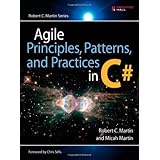
Agile Principles, Patterns, and Practices in C# Review

Agile Principles, Patterns, and Practices in C#
Average Reviews:

(More customer reviews)
Are you looking to buy Agile Principles, Patterns, and Practices in C#? Here is the right place to find the great deals. we can offer discounts of up to 90% on Agile Principles, Patterns, and Practices in C#. Check out the link below:

>> Click Here to See Compare Prices and Get the Best Offers

Agile Principles, Patterns, and Practices in C# ReviewFirst, this book is well written and presents information in a constructive manner. It is well thought out, and is not just another C#/OOP/XP book.
Now for the bad news. One unnecessary oversight is the use of casts and "object" in some examples. Any author writing any C# book since 2005 must know that these idioms should no longer be encouraged. It is unacceptable for a book published in February 2007 to possess this flaw.
Generics, used in moderation, result in cleaner code that is also type-safe, and usually performs better due to the absence of boxing/unboxing. The authors should consider posting alternative examples that favor Generic types and collections on their errata web page. If you purchase this book, you would be well-advised to review the examples with a bias against the use of casts and the word "object".
To be entirely frank, I don't see how other reviewers can justify a five star rating.Agile Principles, Patterns, and Practices in C# Overview
With the award-winning book Agile Software Development: Principles, Patterns, and Practices, Robert C. Martin helped bring Agile principles to tens of thousands of Java and C++ programmers. Now .NET programmers have a definitive guide to agile methods with this completely updated volume from Robert C. Martin and Micah Martin, Agile Principles, Patterns, and Practices in C#.

This book presents a series of case studies illustrating the fundamentals of Agile development and Agile design, and moves quickly from UML models to real C# code. The introductory chapters lay out the basics of the agile movement, while the later chapters show proven techniques in action. The book includes many source code examples that are also available for download from the authors' Web site.

Readers will come away from this book understanding

Agile principles, and the fourteen practices of Extreme Programming
Spiking, splitting, velocity, and planning iterations and releases
Test-driven development, test-first design, and acceptance testing
Refactoring with unit testing
Pair programming
Agile design and design smells
The five types of UML diagrams and how to use them effectively
Object-oriented package design and design patterns
How to put all of it together for a real-world project

Whether you are a C# programmer or a Visual Basic or Java programmer learning C#, a software development manager, or a business analyst, Agile Principles, Patterns, and Practices in C# is the first book you should read to understand agile software and how it applies to programming in the .NET Framework.


Want to learn more information about Agile Principles, Patterns, and Practices in C#?

>> Click Here to See All Customer Reviews & Ratings Now
Read More...

Beginning C# 3.0: An Introduction to Object Oriented Programming (Wrox Beginning Guides) Review

Beginning C# 3.0: An Introduction to Object Oriented Programming (Wrox Beginning Guides)
Average Reviews:

(More customer reviews)
Are you looking to buy Beginning C# 3.0: An Introduction to Object Oriented Programming (Wrox Beginning Guides)? Here is the right place to find the great deals. we can offer discounts of up to 90% on Beginning C# 3.0: An Introduction to Object Oriented Programming (Wrox Beginning Guides). Check out the link below:

>> Click Here to See Compare Prices and Get the Best Offers

Beginning C# 3.0: An Introduction to Object Oriented Programming (Wrox Beginning Guides) ReviewI've read several of Dr. Purdum's books in the past and have always found them informative and enjoyable to read. Beginning C# 3.0, An introduction to Object Oriented Programming (Wrox) is one of his best book yet. As he asks in the introduction, there are dozens of C# texts out there, so why should you pick this one? His answer is that, while most of the other texts were written by extremely capable programmers, few of the authors have never stood in front of several hundred students looking for examples that teach the material yet are easy to understand and remember. Several of the key strengths of this book are the examples and the way Dr. Purdum anticipates the reader's questions.
For example, in covering the OOP concept of encapsulation in Chapter 2, he discusses why programmers hide the data properties of an object inside the object. He states: "You hide them for the same reason that kings used to hide their daughters in the castle tower...to keep other people from messing around with them." Later on, when discussing the difference between public and private access specifiers, he points out that using the public access specifier is like locking the princess in the castle tower and then passing out her room key to all the knights of the realm. I don't know about you, but this is easier for me to remember this than some dry explanation that one often reads on encapsulation.
Another strength is the way he anticipates rough spots for the student. One of the most difficult concepts for beginning programmers is the difference between value types and reference types. Dr. Purdum uses a simple explanation of what a symbol table is to discuss l-values and r-values. He then introduces a concept he developed called Bucket Analogy which uses the symbol table concepts to explain the difference between the two classes of data. Even experienced programmers will appreciate this example and how it truly makes the differences clear. He uses a job interview to explain what objects are as well as cookie cutters to explain instantiation. The book does reflect his 25 years of teaching experience.
The material covered is what you'd expect for an introductory text. He also covers relatively new topics like Generics and LINQ. The database chapter even has a fairly complete DBMS. However, the entire theme is to teach OOP and good coding techniques. For example, he'll write a code example that works but then calls it an example of RDC (Really Dumb Code). He then rewrites the code and explains why it is a better solution, especially when writing for a commercial environment. His objective is to teach you good OOP techniques using C# as the vehicle to learn those techniques. His experience owning a software company for 17 years shows through while doing this.
If you want to get a solid introduction to OOP and C#, choosing this book is one of the best choices you can make.
Beginning C# 3.0: An Introduction to Object Oriented Programming (Wrox Beginning Guides) Overview

Want to learn more information about Beginning C# 3.0: An Introduction to Object Oriented Programming (Wrox Beginning Guides)?

>> Click Here to See All Customer Reviews & Ratings Now
Read More...

C# Programming: From Problem Analysis to Program Design Review

C# Programming: From Problem Analysis to Program Design
Average Reviews:

(More customer reviews)
Are you looking to buy C# Programming: From Problem Analysis to Program Design? Here is the right place to find the great deals. we can offer discounts of up to 90% on C# Programming: From Problem Analysis to Program Design. Check out the link below:

>> Click Here to See Compare Prices and Get the Best Offers

C# Programming: From Problem Analysis to Program Design ReviewI am surprised to see the few people here that are raving about this book. This is not my first programming class, but this is one of the worst textbook we have had to use. I don't just base this on my experience but it has actually been a topic of conversation within our discussion boards. The college is using this book as our textbook for an online class. The problem with the book is the author appears to talk in circles. I would prefer a more direct approach of this is and that is and this is why this does that, period, then some examples. But the author goes on, starts to cover information then says it will be in a chapter in the future? I also have the power point presentations that are a real hit and miss with the data. Not all the data in logically covered in the presentations from the book, I have found large portions completely not included in the presentations.
Personally I have ordered another book to help enlighten me from the circles this author has left me in. I have found better explanations at Microsoft direct than this book.C# Programming: From Problem Analysis to Program Design Overview

Want to learn more information about C# Programming: From Problem Analysis to Program Design?

>> Click Here to See All Customer Reviews & Ratings Now
Read More...