Showing posts with label beginners guide. Show all posts

C# 3.0: A Beginner's Guide Review

C# 3.0: A Beginner's Guide
Average Reviews:

(More customer reviews)
Are you looking to buy C# 3.0: A Beginner's Guide? Here is the right place to find the great deals. we can offer discounts of up to 90% on C# 3.0: A Beginner's Guide. Check out the link below:

>> Click Here to See Compare Prices and Get the Best Offers

C# 3.0: A Beginner's Guide ReviewThis is an excellent introduction to C#. The language concepts are explained well, in an order that is easy to follow. I only occasionally encountered a term that he hadn't mentioned yet.
The examples are short - so they can be easily read completely - and do a good job reinforcing the material. They are also well formatted (e.g., the indentation) and I think they're correct. (This makes the book easy to read - one doesn't have to struggle through long examples, constantly turning pages back and forth, only to finally conclude that there's probably a bug in the code anyway.)
I like the fact that the author sticks to the subject he's explaining, rather than cluttering his writing with lame attempts at humor.
I like his overview of some more advanced language topics, such as LINQ and lambda expressions - I came away with a good idea of what these features mean, and how and why I might want to use them. To use them very much, I'd want to learn more, but the important thing for somebody new to the language is to first get a good basic understanding of what a feature is. (Other C# books I've read have left me wondering exactly what these features are.)
There are frequent comments about how C# differs from some other languges, such as C and C++ in sometimes subtle ways. (These are set off from the main text so that one can easily ignore them if the information is not needed.)
It isn't an advanced book, but on completing it, one should be able to write lots of useful C# code.
C# 3.0: A Beginner's Guide Overview

Want to learn more information about C# 3.0: A Beginner's Guide?

>> Click Here to See All Customer Reviews & Ratings Now
Read More...

Stephens' C# Programming with Visual Studio 2010 24-Hour Trainer (Wrox Programmer to Programmer) Review

Stephens' C# Programming with Visual Studio 2010 24-Hour Trainer (Wrox Programmer to Programmer)
Average Reviews:

(More customer reviews)
Are you looking to buy Stephens' C# Programming with Visual Studio 2010 24-Hour Trainer (Wrox Programmer to Programmer)? Here is the right place to find the great deals. we can offer discounts of up to 90% on Stephens' C# Programming with Visual Studio 2010 24-Hour Trainer (Wrox Programmer to Programmer). Check out the link below:

>> Click Here to See Compare Prices and Get the Best Offers

Stephens' C# Programming with Visual Studio 2010 24-Hour Trainer (Wrox Programmer to Programmer) ReviewThis is not the only book I bought to learn C#, but after a lot of searching, it's the one I believed could get me "up and running" in minimum time. After a few days with Rod's book and DVD combo, I'm more convinced than ever it's "that good" if you are just getting started with Visual C#. And don't let the title fool you--there is a lot of breadth in the book and sufficient depth to keep you occupied, even while Stephens makes the learning enjoyable.
I'm fairly experienced with the Visual Basic product line (through VB6) and initially intended to move to .NET programming with Visual Basic 2008. Yet, for a number of reasons (mainly to rewrite a commercial application) I decided to learn C# instead. I do not write programs for a living, however, and I'm largely self-taught (OK, one class in college--FORTRAN--which I hated and swore would be the last of my life. It was!).
Rod's book is perfect for me and a lot of others, I believe, who 1.) think learning a language isn't necessarily linear--that is, start at the "beginning" and study each topic in turn until you become fluent and 2.) want to start being productive right away and 3.) don't want to be buried by minutae before understanding basic concepts. He deftly avoids these potential pitfalls quite nicely.
The book is very well organized and cross-referenced which makes study and review very straightforward. Stephens has a great feel for knowing what you need and when, and often anticipates where the questions will come from before you think to ask. Rod explains patiently but compactly--a fluid style that carries through the entire way. He really is a master trainer that teaches "at your desk" versus from a lecturn--and I think you'll like that approach a lot. I certainly do.
Predictably, the book begins by familiarizing you with the programming environment (i.e., the tool you'll use to write programs) but it's an important section and offers solid advice on using the Visual Studio framework. You'll want to refer back to it well after the rest of the book is familiar.
He then explains how to get the "visual" part of your program going--things like using fundamental controls (text boxes, buttons, etc.) and menus. From there, you move on to incorporating calculations and logic--backbones of virtually every program.
The next sections cover Object Oriented Programming (OOP) and do a lot to de-mystify its nature and implementation. Classes are covered in detail with concept descriptions of things like "encapsulation, inheritence, and polymorphism" , amongst others, as well as getting on to the nuts and bolts: properties; methods; raising events; and structures. A host of related ideas are also fleshed out like, collections; arrays; interfaces; overloading plus a whole lot more.
Following that are chapters with popular topics (graphics, databases, LINQ, files, WPF and more) that, while relatively introductory, will still allow you to write non-trivial code. They are largely independently so if there is something you want to find out about, you can easily jump in and out in whatever sequence suits you. Best of all, after completing a chapter, you'll know enough to ask meaningful questions and begin to explore beyond the book if there's something you need to know more about.
Two things really make Stephens' package unique but without a hint of gimmick: the DVD material; and the "Try It" and "Exercise" sections. The DVD, because it's so handy, might tempt you to focus on the videos at the expense of the book, at least to start....
While I think that's 'OK' when you're poking around, once you get serious, you'll realize that the book chapters and the videos go hand-in-hand. I suspect this is particularly true if you're new to programming. Even still, the videos don't cover everything in the book (though, as an aside, there are a few things mentioned in the videos that the book doesn't address.) The videos are well-paced but move right along. Of course, you can watch as often as you like and pause or rewind as needed.
Beyond that, there is simply no substitute for rolling up your sleeves and trying to practice what you've been learning about. The book accommodates that by providing directed study which guides your efforts and provides reasonable challenges. I think you'll find that to be a significant benefit! And how about this--you can email Rod, download source code used in the book and access blogs and forums about C#. The book is really a gateway to a great set of resources!
The only nits I have are small ones...
First, the narrative on the DVDs, while perfectly audible, appears to be the "raw" recording with no post-processing to filter out the occasional background noise. I was a bit surprised by this initially, but soon paid no attention to it.
Second, you might have to play around with your computer monitor's display resolution settings to optimize the video. (I settled on 1024x768 which seemed to work best for me.)
Lastly, and this really can't be considered a nit, Rod's book won't be the last if you want to really dig into all of C#'s nooks and crannies. You'll be able to do a lot with it (really), just not everything. But it will give you a fantastic and reasonably comprehensive start, even if you are new to programming--I'm sure of it.
One final thought--be prepared to highlight, write notes to yourself in the margins, flip-back and forth, review and the rest of the things needed to become a programmer. Some things never change, even if Stephens has made it a whole lot simpler and more fun. Highly, highly recommended!Stephens' C# Programming with Visual Studio 2010 24-Hour Trainer (Wrox Programmer to Programmer) Overview

Want to learn more information about Stephens' C# Programming with Visual Studio 2010 24-Hour Trainer (Wrox Programmer to Programmer)?

>> Click Here to See All Customer Reviews & Ratings Now
Read More...

Illustrated C# 2008 (Expert's Voice in .NET) Review

Illustrated C# 2008 (Expert's Voice in .NET)
Average Reviews:

(More customer reviews)
Are you looking to buy Illustrated C# 2008 (Expert's Voice in .NET)? Here is the right place to find the great deals. we can offer discounts of up to 90% on Illustrated C# 2008 (Expert's Voice in .NET). Check out the link below:

>> Click Here to See Compare Prices and Get the Best Offers

Illustrated C# 2008 (Expert's Voice in .NET) ReviewThis book is for programmers not individuals new to programming. This book covers C# 2008 pretty well in terms of explaining C# constructs such as how to write a class and explaining all the nuances of it. However, very little to no explanation is given for why you would want to use whatever the author is explaining--the big picture is pretty much missing. This book will work best for someone that already has a basic understanding of the .NET framework and programming and just wants to get up-to-date on C# 2008.

So, why should you read this book?
1) There is a plethora of examples and they all work. I don't think I have ever seen more sample code.
2) This is a deeply object oriented approach to C#, as it should be.
3) You are a programmer and want to get up-to-date on C# 2008--you are not looking to learn how to program.
4) The functional explanations of C# constructs are clear and complete. Hey, the guy has a degree in English and it shows.
5) The book is not terribly long. You will be able to finish it in a reasonable amount of time (726 pages).
6) I found many illustrations useful even though a few seemed redundant.
7) The author's treatment of LINQ was done very well and clearly.
8) Once having read the book and worked the examples you will have solid C# 2008 skills and be ready to extend your knowledge with other books and training materials.
9) It is fun and mostly easy to read.
Okay then what's not to like?
1) My biggest criticism is for the most part there is no discussion of how or why you would apply a particular C# construct being taught. For example, if you were learning to use an auto mechanic's tools you would learn how to use a box wrench, an open end wrench and an adjustable wrench but no idea of why you would choose one wrench over another for a particular task.
2) Inner Exceptions were not covered in the chapter on exceptions.
3) While almost all explanations of C# constructs were done well I felt events in Chapter 16 needed to be reworked--it just wasn't that clear.
4) No treatment of ADO.NET
5) No treatment of XML
Illustrated C# 2008 (Expert's Voice in .NET) OverviewC# is the most influential language on the .NET platform. As Microsoft's preferred language it has established a solid user base over recent versions and is drawing in developers from older technologies at an ever increasing rate.This book caters to that migrating audience. Developers already familiar with the basic concepts of a programming language (any programming language) often find the traditional compendium-based ‘beginner's guides' heavy and difficult to read as they spend a lot of time explaining concepts the reader already understands from their previous technology.Illustrated C# is an antidote to this. It packs the essentials of the C# language into just 600 pages, using an array of visual styles to provide a clear, fast, reference to the core of the technology. It's a book migrating developers can read in a day and grasp enough of the language to find their feet and move confidently onto the .NET platform.

Want to learn more information about Illustrated C# 2008 (Expert's Voice in .NET)?

>> Click Here to See All Customer Reviews & Ratings Now
Read More...

Microsoft Visual Studio 2010: A Beginner's Guide Review

Microsoft Visual Studio 2010: A Beginner's Guide
Average Reviews:

(More customer reviews)
Are you looking to buy Microsoft Visual Studio 2010: A Beginner's Guide? Here is the right place to find the great deals. we can offer discounts of up to 90% on Microsoft Visual Studio 2010: A Beginner's Guide. Check out the link below:

>> Click Here to See Compare Prices and Get the Best Offers

Microsoft Visual Studio 2010: A Beginner's Guide ReviewOne may wonder how anyone could write a decent introductory book to Visual Studio and related programming, do it just over 400 pages with decent sized type and screenshots, and still cover a little bit of everything from Asp.Net to MVC to WPF. This book successfully manages that task quite well.
The first four chapters get you up to speed on finding your way around visual studio enough to get a project started. It also includes brief tutorial on programming in both Visual Basic and C#. If you have programmed in other languages, or you are just starting programming, this will give you just enough knowledge to get started inside Visual Studio.. It covers program structure, some language syntax, and how to best use the Visual Studio make programming tasks easier.
The next three chapters cover creating projects, debugging, and accessing data. While whole books can be written on these subjects, Joe manages to hit the useful high points. Since much time can be spend debugging, understanding the debugging tools is essential for developers new to Visual Studio. Many hours of debugging can be saved by using the built in tools. He explains breakpoints and the useful debugging windows, and give a great walkthrough of using these concepts to track down a bug in a program with bugs.
The next part covers web and windows applications using ASP.NET MVC, Silverlight, WPF, and web services.. Again, whole books are written on these subjects. This book works through just enough information to understand how to use each topic, and a sample program for each to illustrate the concept. I, knowing very little about MVC, built the example in the chapter, and found how easy it was to learn.
Finally, enhancing and extending Visual Studio 2010 is covered. Templates, snippets and macro are covered as well as project add-ins.
Overall, I found the book well written, organized, and easy to use. Topics are introduced in a logical order. It is best to read the first seven chapters, and then after that, the chapters you are interested in. If you are interested in web, you can skip the WPF chapter and vice versa. This book is a must have for the entry level developer with little or no experience with Visual Studio. If you are a career developer with little or no Visual Studio experience, this book is a great introduction.
Microsoft Visual Studio 2010: A Beginner's Guide Overview

Want to learn more information about Microsoft Visual Studio 2010: A Beginner's Guide?

>> Click Here to See All Customer Reviews & Ratings Now
Read More...

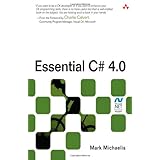
Essential C# 4.0 (3rd Edition) (Microsoft .NET Development Series) Review

Essential C# 4.0 (3rd Edition) (Microsoft .NET Development Series)
Average Reviews:

(More customer reviews)
Are you looking to buy Essential C# 4.0 (3rd Edition) (Microsoft .NET Development Series)? Here is the right place to find the great deals. we can offer discounts of up to 90% on Essential C# 4.0 (3rd Edition) (Microsoft .NET Development Series). Check out the link below:

>> Click Here to See Compare Prices and Get the Best Offers

Essential C# 4.0 (3rd Edition) (Microsoft .NET Development Series) ReviewThis is an excellent book about C# the language. Please read that again, as I can see a lot of people mistake what this book is - it is NOT a book about .Net (although it definitely is related to that) or about any specific frameworks that _use_ C#, such as WPF or ASP.Net or anything like that. It's a book about the C# language itself. And assuming that's what you want, it's a really well done book. It also clearly points out what C# features are in/from the different versions of C# much, much better than any other book I've ever seen.
I'm not going to give an overview of the chapters, as you can already see what those are in the information section above. The coverage of every topic is very thorough, and the writing and sample code are both of high quality. If I had to complain about something here, it would be that some things which seem like "advanced" topics aren't marked as such all the time, while others are.
This book is a great reference, but you'll probably want it along with another book about something you want to _do_ with C#. You can use that other book (about WPF or ASP or whatever) to guide you along what you want to do and then use this one as a guide to C#. If you're new to C# or moving over from other languages (as I am), then you might want to read this first (yes, this is a long read, but it's worth it), then go to the other book, and only consult this one again when needed.
Oh, one last note. This book actually mentions MONO much more than other books like it, which is a nice touch.Essential C# 4.0 (3rd Edition) (Microsoft .NET Development Series) OverviewEssential C# 4.0 is a well-organized,"no-fluff" guide to all versions of C# for programmers at all levels of C# experience. This fully updated edition shows how to make the most of C# 4.0's new features and programming patterns to write code that is simple, yet powerful.This edition contains two new chapters on parallel programming, multi­threading, and concurrency, as well as extensive coverage of new C# 4.0 features: dynamic typing, variance, optional/named parameters, and many other new topics. Mark Michaelis covers the C# language in depth, illustrating key constructs with succinct, downloadable code examples. Graphical "mind maps" at the beginning of each chapter show what material is covered and how individual topics interrelate. Topics intended for beginners and advanced readers are clearly marked, and the book includes indexes of C# versions (2.0, 3.0, and 4.0), which make it easy for readers to reference topics specific to a given release of C#. Following an introduction to C#, readers learn aboutBest practices for object-oriented programming in C#

Want to learn more information about Essential C# 4.0 (3rd Edition) (Microsoft .NET Development Series)?

>> Click Here to See All Customer Reviews & Ratings Now
Read More...

How to Read Music: Fundamentals of Music Notation Made Easy Review

How to Read Music: Fundamentals of Music Notation Made Easy
Average Reviews:

(More customer reviews)
Are you looking to buy How to Read Music: Fundamentals of Music Notation Made Easy? Here is the right place to find the great deals. we can offer discounts of up to 90% on How to Read Music: Fundamentals of Music Notation Made Easy. Check out the link below:

>> Click Here to See Compare Prices and Get the Best Offers

How to Read Music: Fundamentals of Music Notation Made Easy ReviewIn the first part, the book covers the basic notation in detail, step by step. Author asks you to do a review and make sure you know all the previous material before attempting musical sight reading exercises. The second part of the book covers the more complex notation found in the classical pieces. It is more fast paced because the author assumes that a reader has accumulated the knowledge from the first part. At the end, there are: a directory of musical signs, a directory of all notes on the piano and guitar, and a short musical dictionary. Very handy reference.
Are there better books on the topic? I do not know. I'm not an expert. In my opinion the book does what it advertises. You'll certainly learn how to read the music. Price is really acceptable. Check out the reviews for other books of Roger Evans. Rather impressive. Then judge for yourself.
I'll give it five stars.How to Read Music: Fundamentals of Music Notation Made Easy Overview

Want to learn more information about How to Read Music: Fundamentals of Music Notation Made Easy?

>> Click Here to See All Customer Reviews & Ratings Now
Read More...

The Photoshop Darkroom 2: Creative Digital Transformations Review

The Photoshop Darkroom 2: Creative Digital Transformations
Average Reviews:

(More customer reviews)
Are you looking to buy The Photoshop Darkroom 2: Creative Digital Transformations? Here is the right place to find the great deals. we can offer discounts of up to 90% on The Photoshop Darkroom 2: Creative Digital Transformations. Check out the link below:

>> Click Here to See Compare Prices and Get the Best Offers

The Photoshop Darkroom 2: Creative Digital Transformations ReviewThis slim volume covers a few areas of image-processing. Some areas are covered nicely, while others are considerably weaker.
Harold Davis excels with his backlit images of flowers which have all the delicacy of water color. His technique (he calls it 'hand hdr') of combining multiple exposures is covered in detail. He also describes his unusual compositing techniques, which have given him strange and beautiful images. He enjoins the reader to experiment with different color spaces, particularly Lab Color. Virtually all of his transformations are accomplished without the filters (pastel, gesso, brushstrokes, etc) used by first-timers. This is all valuable information.
Where I feel that Davis falls short is in his actual use of Photoshop. While his techniques work, they barely touch on more recent developments in PS. For example, Davis recommends layering varied conversions of the same RAW file. But he doesn't touch on the subject of smart layers, which both simplify this process and confer greater flexibility. Nor is there any mention of adjustment layers, which I believe would accomplish many of his effects with less fuss. Much of his compositing (I'm thinking particularly of his Escher-like staircases) would be much easier with the new puppet warp feature. He also uses a brush to paint over many problem areas; while he's good at it, it's devilishly difficult to do and shows too little faith in judicious use of the new context-sensitive features of CS5. The section on glamour retouching should have been excluded. Many of the problems could have been eliminated by more careful studio lighting. Most of the remaining touch-up looks artificial. All in all, it feels like Davis's knowledge of Photoshop has not been refreshed in quite some time.
For an overall sense of good PS workflow, I still feel that the books of Martin Evening are in a league of their own. Once the user has an up-to-date feel for the program, there are still some nice tidbits in this book.The Photoshop Darkroom 2: Creative Digital Transformations Overview

Want to learn more information about The Photoshop Darkroom 2: Creative Digital Transformations?

>> Click Here to See All Customer Reviews & Ratings Now
Read More...

C# 4.0 How-To Review

C# 4.0 How-To
Average Reviews:

(More customer reviews)
Are you looking to buy C# 4.0 How-To? Here is the right place to find the great deals. we can offer discounts of up to 90% on C# 4.0 How-To. Check out the link below:

>> Click Here to See Compare Prices and Get the Best Offers

C# 4.0 How-To ReviewThis book's title does not quite match its content but the book's introduction does indicate this. This is primarily a very good book of code and code algorithms in the .NET framework using C#. That being said the book does cover the changes made to the .NET 4.0 framework and to C# 4.0.
The code is very well written--it is beautiful well structured communicative code. The code in the book is sparsely commented; it is so well-written that few comments are needed. As I have said, in many ways the book is a book of code algorithms, for example, in chapter 5 Convert Between Number Bases, Convert a Number to Bytes, Determine if an Integer is Even, Determine if a Number is Prime, Count the Number of 1 Bits etc. All these code examples are useful algorithms but have nothing to do with .NET Framework 4.0 or C# 4.0 per se.
Despite what the Introduction says this is decidedly not a book for beginners. While they may be able to find useful algorithms here and there the content of the book is way too terse for a beginner to follow and they should turn to other books for a more complete introduction to C#. Chapter 8 on regular expressions will only be useful to programmers that already have the basics of regular expressions well-understood otherwise even the first few code examples will leave them scratching their heads. This book does not do any hand-holding but rather shows you in very practical ways how to use the C# language and the .NET framework.
I loved the code examples using dynamic types as this was the best example I have yet seen of using them in a practical straight-forward way. The code is the book is not just useful and terse but it is also elegant. For example, the ternary operator is used multiple times in the CompressFile project in Chapter 11 producing really elegant concise and clear code.
The book, not the down-loadable code, has a few errors and code bugs but very few, for example:
Pg 16 code won't compile since _x is private and therefore not accessible to the derived class
Pg 17 line Console.WriteLine(d.MyProperty().ToString()); wont compile
Pg 17 code wont compile, class Derived not inheriting from Base class--missing : base
DoSomething method in class Derived needs to be marked override not virtual to eliminate compiler warning
Pg 65 example code given says, "Because ArgumentNullException is a type of ArgumentException, and ArgumentException is first in the catch list, it will be called." This is not true as the compiler is smart enough to recognize the problem and results in a compiler error and therefore the code will not even run.
I recommend this book for intermediate and advanced developers. Read the book and study the code examples and you will:
1) Learn the .NET Framework 4.0
2) Learn C# 4.0
3) Add to your inventory of useful code algorithms
4) Improve your written code by reading and studying the elegant code in this book.C# 4.0 How-To Overview

Want to learn more information about C# 4.0 How-To?

>> Click Here to See All Customer Reviews & Ratings Now
Read More...

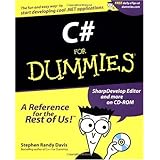
C# for Dummies (With CD-ROM) Review

C# for Dummies (With CD-ROM)
Average Reviews:

(More customer reviews)
Are you looking to buy C# for Dummies (With CD-ROM)? Here is the right place to find the great deals. we can offer discounts of up to 90% on C# for Dummies (With CD-ROM). Check out the link below:

>> Click Here to See Compare Prices and Get the Best Offers

C# for Dummies (With CD-ROM) ReviewAlthough the "Dummies" title implies a "Beginner" book, this book falls into the "Beginner to Intermediate Developer" range. This is a good book for Visual Basic developers who want to make the conversion to C# or for the beginner. Like all Dummies series, there are ample examples and the author does a great job of explaining the C# language. Windows forms are covered in Chapter 17 and 18 but there is no discussion about Web development or using C# with Active Server Pages (ASP).
Starting in Chapter 6 (Collecting Data - The Class and the Array) there are several really annoying errors, for example, on page 105 the author uses "for (int i = 0; i < 11; i++)" to iterate thru a 10 element array. In the section below this (Array bounds checking), the author uses exactly the same code and says this will fail. The first code should be "for (int i = 0; i < 10; i++)". These errors are scattered through out the book. Still this is a good book and I would highly recommend it.C# for Dummies (With CD-ROM) Overview

Want to learn more information about C# for Dummies (With CD-ROM)?

>> Click Here to See All Customer Reviews & Ratings Now
Read More...

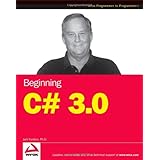
Beginning C# 3.0: An Introduction to Object Oriented Programming (Wrox Beginning Guides) Review

Beginning C# 3.0: An Introduction to Object Oriented Programming (Wrox Beginning Guides)
Average Reviews:

(More customer reviews)
Are you looking to buy Beginning C# 3.0: An Introduction to Object Oriented Programming (Wrox Beginning Guides)? Here is the right place to find the great deals. we can offer discounts of up to 90% on Beginning C# 3.0: An Introduction to Object Oriented Programming (Wrox Beginning Guides). Check out the link below:

>> Click Here to See Compare Prices and Get the Best Offers

Beginning C# 3.0: An Introduction to Object Oriented Programming (Wrox Beginning Guides) ReviewI've read several of Dr. Purdum's books in the past and have always found them informative and enjoyable to read. Beginning C# 3.0, An introduction to Object Oriented Programming (Wrox) is one of his best book yet. As he asks in the introduction, there are dozens of C# texts out there, so why should you pick this one? His answer is that, while most of the other texts were written by extremely capable programmers, few of the authors have never stood in front of several hundred students looking for examples that teach the material yet are easy to understand and remember. Several of the key strengths of this book are the examples and the way Dr. Purdum anticipates the reader's questions.
For example, in covering the OOP concept of encapsulation in Chapter 2, he discusses why programmers hide the data properties of an object inside the object. He states: "You hide them for the same reason that kings used to hide their daughters in the castle tower...to keep other people from messing around with them." Later on, when discussing the difference between public and private access specifiers, he points out that using the public access specifier is like locking the princess in the castle tower and then passing out her room key to all the knights of the realm. I don't know about you, but this is easier for me to remember this than some dry explanation that one often reads on encapsulation.
Another strength is the way he anticipates rough spots for the student. One of the most difficult concepts for beginning programmers is the difference between value types and reference types. Dr. Purdum uses a simple explanation of what a symbol table is to discuss l-values and r-values. He then introduces a concept he developed called Bucket Analogy which uses the symbol table concepts to explain the difference between the two classes of data. Even experienced programmers will appreciate this example and how it truly makes the differences clear. He uses a job interview to explain what objects are as well as cookie cutters to explain instantiation. The book does reflect his 25 years of teaching experience.
The material covered is what you'd expect for an introductory text. He also covers relatively new topics like Generics and LINQ. The database chapter even has a fairly complete DBMS. However, the entire theme is to teach OOP and good coding techniques. For example, he'll write a code example that works but then calls it an example of RDC (Really Dumb Code). He then rewrites the code and explains why it is a better solution, especially when writing for a commercial environment. His objective is to teach you good OOP techniques using C# as the vehicle to learn those techniques. His experience owning a software company for 17 years shows through while doing this.
If you want to get a solid introduction to OOP and C#, choosing this book is one of the best choices you can make.
Beginning C# 3.0: An Introduction to Object Oriented Programming (Wrox Beginning Guides) Overview

Want to learn more information about Beginning C# 3.0: An Introduction to Object Oriented Programming (Wrox Beginning Guides)?

>> Click Here to See All Customer Reviews & Ratings Now
Read More...

The Real AA: Behind the Myth of 12-Step Recovery Review

The Real AA: Behind the Myth of 12-Step Recovery
Average Reviews:

(More customer reviews)
Are you looking to buy The Real AA: Behind the Myth of 12-Step Recovery? Here is the right place to find the great deals. we can offer discounts of up to 90% on The Real AA: Behind the Myth of 12-Step Recovery. Check out the link below:

>> Click Here to See Compare Prices and Get the Best Offers

The Real AA: Behind the Myth of 12-Step Recovery ReviewThis is my first Amazon review, but I thought it was important to add my name to the list of people who have been greatly helped by this book. Particularly, I appreciated his willingness to discuss the emotional nature of addiction, and some of the ways that nature develops in us as children. I was forced into the 12-steps at the age of 13, by parents who were coached by the so-called experts in the field. I was "sober" for many years in A.A., but never found anything like lasting peace of mind. Never, in all the thousands of meetings I attended, did I hear any constructive discussion about the childhood roots addiction, and how the 12-steps could help me heal them. This book explains why. Now, 25 years later, and with the help of books like this, I have begun to untangle the emotional threads that led not only to my adolescent drug use, but to the deep unhappiness that plagued me in my adult life, even as a respected member of "the program."
If you are struggling with addiction, or have tried the 12-steps and continue to suffer mentally and emotionally, consider reading this book.It is not a quick-fix, but it may provide crucial information about yourself that you will never hear in A.A. I see that many people who are members of a 12-step program have left negative reviews for this book. It is revealing that these people are threatened by its message. I feel strongly that no person who is secure, and in a health place regarding their own addiction and themselves, would actively discourage people from thinking critically about anything. I think their obvious fear about this book speaks for itself. The ultimate goal is, as A.A. says, to be happy, joyous and free. This book has helped me take a welcome step in that direction. Best of luck to all of us.The Real AA: Behind the Myth of 12-Step Recovery Overview

Want to learn more information about The Real AA: Behind the Myth of 12-Step Recovery?

>> Click Here to See All Customer Reviews & Ratings Now
Read More...

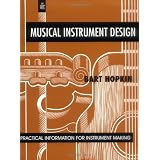
Musical Instrument Design: Practical Information for Instrument Design Review

Musical Instrument Design: Practical Information for Instrument Design
Average Reviews:

(More customer reviews)
Are you looking to buy Musical Instrument Design: Practical Information for Instrument Design? Here is the right place to find the great deals. we can offer discounts of up to 90% on Musical Instrument Design: Practical Information for Instrument Design. Check out the link below:

>> Click Here to See Compare Prices and Get the Best Offers

Musical Instrument Design: Practical Information for Instrument Design ReviewThis volume covers enough theory and practice in construction of various wind, percussion, and other noisemakers for any artist or teacher to begin exploring novel musical instruments. There's just enough technical information to whet one's whistle, and a freewheeling discussion of materials and methods. For the musician who wants a new toy, decriptions of history and function have enough detail for success on the first try. Teachers will probably find it a good source for stimulating creativity in just about any age group. Check it out!Musical Instrument Design: Practical Information for Instrument Design Overview

Want to learn more information about Musical Instrument Design: Practical Information for Instrument Design?

>> Click Here to See All Customer Reviews & Ratings Now
Read More...

Head First C#, 2E: A Learner's Guide to Real-World Programming with Visual C# and .NET (Head First Guides) Review

Head First C#, 2E: A Learner's Guide to Real-World Programming with Visual C# and .NET (Head First Guides)
Average Reviews:

(More customer reviews)
Are you looking to buy Head First C#, 2E: A Learner's Guide to Real-World Programming with Visual C# and .NET (Head First Guides)? Here is the right place to find the great deals. we can offer discounts of up to 90% on Head First C#, 2E: A Learner's Guide to Real-World Programming with Visual C# and .NET (Head First Guides). Check out the link below:

>> Click Here to See Compare Prices and Get the Best Offers

Head First C#, 2E: A Learner's Guide to Real-World Programming with Visual C# and .NET (Head First Guides) ReviewHead First C# was my first experience with the Head First series, although I have since also purchased the excellent Head First Design Patterns (Head First).
This book is designed to teach you C# from the beginning. Technical books can generally be categorized as either tutorials or reference texts -- and this is absolutely in the tutorial category. It's intended to be read and worked through in order, from start to finish. If you already know C# and are looking for a reference text, look elsewhere. If you're an experienced C++ programmer looking to learn C# but are already very familiar with object oriented programming, consider checking out the excellent and concise Accelerated C# 2008 (Accelerated). If you're an experienced C# programmer and just want to learn the advanced features of C#2 and C#3, you'll again want to look elsewhere, and you couldn't do better than C# in Depth: What you need to master C# 2 and 3.
But if you want to *learn* C# and object-oriented programming, and especially if you have little or no prior programming experience, look no further than this fantastic book. If you're reading reviews of the book, then you probably know two things: it has an unusual style and some quirky humor, and it has a bit more than it's fair share of errors. These two things are true, but there's a lot more about the book that you should know, and that's mostly what I want to talk about in this review. Before I move on, though, let me say two things. First, the conversational style and the humor are sometimes overstated -- this is a book about programming, and it's not a joke a minute or anything. I know that you can't Search Inside here on Amazon to see what the book is like, which I assume is because of the visuals-heavy design and unusual layout of the text, but just do a quick search for the book's website and you can download a full sample chapter and some other excerpts. Judge for yourself before dismissing an excellent book based on its unusual (but effective!) design. Second, the errata *are* extensive, but they don't get in the way of your learning. This book shines for its well-chosen examples, its focus on your learning (you'll be talked to rather than at), and its great overall structure -- and none of the errata interfere with any of that at all. If the extensive errata lists do bother you, I wrote a small free program that can sort through them for you and filter out the types of errors or page ranges you're not interested in. (You can find the link stickied at the web forum for Head First C#.)
There are also some features of the book that I don't see mentioned often enough, and which I want to comment on briefly before getting to the heart of the review. First, I love that the introduction is actually useful, giving you valuable insights on why the authors made the design choices they did (why text is in the pictures, rather than beneath them as captions, for example), and offering advice on how best to approach the book if you want to maximize your learning experience. I highly recommend reading it. Second, it's worth mentioning the way that the book uses the (free) Visual Studio 2008 IDE to make graphical Windows applications throughout, rather than focusing on a text editor and console applications like many other introductory texts. Visual Studio is a powerful IDE, and it *helps* you learn with syntax highlighting and Intellisense -- I'm very glad that the Head First C# authors chose to incorporate its use into the book, because it often allowed me to focus on concepts at first rather than syntax, picking that up gradually through repeated use with the IDE's guidance. Third, you'll be making some genuinely impressive software over the course of the book -- between the use of Visual Studio and the authors' being unafraid to assign projects that take several pages just to *describe*, you'll get a much better feel for what it's like to make real software than you would from the small "toy" examples that are more common in many other introductory books. (But don't worry, there's plenty of guidance, including fully annotated solution code for most of them, and a helpful web forum if you get stuck.) Finally, the book has the advantage of going to print for the first time after C# 3.0 and .NET 3.5 were released, and it fluently combines the various iterations of the language, teaching C# *as it now exists* from the ground up in an order that makes sense for someone learning now from scratch, rather than taking the more common but less sensible route of introducing C#1.0 features before C#2 before C#3. This is great, because it allows the authors to introduce some of the powerful and convenient features of the newer editions of the language and framework -- the stuff that really makes C# appealing as a language -- quite early in the book.
The funny thing about Head First C# is that the conversational tone, the humor, the quirky layout, and the pictures make the book seem completely un-academic. At first glance, it's as far from an academic textbook as you could possibly get! But I've come to realize that reading through the book from the beginning, doing all the exercises, is as close to the structured learning experience of an academic course as you can get in book form. The brilliance of Head First C# isn't in the phrasing of any given sentence or the coding style in a particular snippet -- it's in the overall structure of the book and especially in the examples chosen for exercises, which allow you to build up your knowledge incrementally while still reviewing past material. (Which is why the errata really aren't a big deal.) I've seen some reviews point out the book's "redundancy" as a flaw, and I just shake my head. The book is often repetitious, but never redundant, and always deliberately -- seeing the same material repeatedly from different perspectives and at different times is absolutely key to learning anything, and the repetition is one of the best features of the Head First series in general and this book in particular.
So there are errors. So there's a bit of fuzziness in the phrasing sometimes. So it doesn't cover Advanced Language Topic A or B. So what? This book is a teaching tool. It's a full course -- instructor, fellow students, textbook, homework, projects, review sessions, and conversations with peers -- stuffed onto paper, rolled up, printed, and stuck between covers.
I've learned C#, and I've *retained* what I've learned. I've had fun doing it. And if you too want to learn C# and programming, I can't recommend Head First C# highly enough.Head First C#, 2E: A Learner's Guide to Real-World Programming with Visual C# and .NET (Head First Guides) Overview

Want to learn more information about Head First C#, 2E: A Learner's Guide to Real-World Programming with Visual C# and .NET (Head First Guides)?

>> Click Here to See All Customer Reviews & Ratings Now
Read More...

The Drummer's Bible: How to Play Every Drum Style from Afro-Cuban to Zydeco Review

The Drummer's Bible: How to Play Every Drum Style from Afro-Cuban to Zydeco
Average Reviews:

(More customer reviews)
Are you looking to buy The Drummer's Bible: How to Play Every Drum Style from Afro-Cuban to Zydeco? Here is the right place to find the great deals. we can offer discounts of up to 90% on The Drummer's Bible: How to Play Every Drum Style from Afro-Cuban to Zydeco. Check out the link below:

>> Click Here to See Compare Prices and Get the Best Offers

The Drummer's Bible: How to Play Every Drum Style from Afro-Cuban to Zydeco ReviewSince I started playing the drumset I've been waiting for someone to complete the monumental task of compiling every known style of set playing in one book. But Mick Berry and Jason Gianni have gone far beyond simply transcribing over 160 styles (about 400 including variations):
They have included historical perspectives, background information, recorded examples (with and without click tracks), and put together a listening list with suggested albums and artists for every style.
There is a very helpful chapter on types of fills and appropriate use of them in each style, including references to famous recordings. There is even a section explaining appropriate tuning and muffling for a drummer playing in a given style.
I really can't stress enough how much detail is contained in this book. I'm a junior high and high school percussion teacher and this is a great reference tool for understanding and explaining different grooves, and I'll be sure to keep it handy when gigging.
Highest recommendation!The Drummer's Bible: How to Play Every Drum Style from Afro-Cuban to Zydeco Overview

Want to learn more information about The Drummer's Bible: How to Play Every Drum Style from Afro-Cuban to Zydeco?

>> Click Here to See All Customer Reviews & Ratings Now
Read More...

Beginning C# Review

Beginning C#
Average Reviews:

(More customer reviews)
Are you looking to buy Beginning C#? Here is the right place to find the great deals. we can offer discounts of up to 90% on Beginning C#. Check out the link below:

>> Click Here to See Compare Prices and Get the Best Offers

Beginning C# ReviewYep after months and months of ranting and criticizing that the red book publishers (Wrox) have lost their magic touch, just when we were about to give up on them, they return with an outstanding book, probably one of the best in their Beginning series ever, and coming back in form in such style, this is simply unbelievable - Beginning C# is all I needed.
Working as a developer in ASP for over 3 years now, but never actually having tried my hands in a real hardcore programming language, I bought EACH AND EVERY book on C# being published since the past one year, but couldn't get past the 40th page of any of the books, they were designed for hardcore programmers and for a moment I wondered if Microsoft and other authors were leaving pure ASP programmers down the drain.
Beginning C# is the answer to all the prayers if you've faced the same delima as I have.
First the drawbacks.
Someone at wrox has decided that publishing a book less than 1000pages is a crime.so I guess I can let go of that. This book has 1031 pages.
Having multiple authors at times irritatingly breaks the smooth flow of explanations from chapter to chapter. GDI+ may be understanding enough as a chapter but the manner of explanations and approach to "try it out" examples is suffocating, irritating and makes you want to tear the entire chapter out of the book.
Also some examples are NOT WORKING and THIS CAN GET YOU FRUSTRATED, so be WARNED.
The plus points.
25 chapters, precise to the point, length of each chapter kept under 25 to 30 pages. Basic aim of each chapter is to explain the topic and right away get your hands dirty with examples.Each example explained step by step.
OOP being an integral part of C# comes only on Ch#8 after you have grown sufficiently confident enough to open Visual Studio and write basic programs for Windows/Web.
This according to me is a very intelligent planning of chapters and hence non of the chapters come across as speaking to you in a foriegn language or in a manner of saying that "sorry if you don't understand us , you are an idiot"....
This book can be held at the same high teaching standards set by Beginning ASPDatabases/Beginning ASP/Beginning JavaScript.
The only other book which even comes close to this is C# By Herb Schildt. Which is another exceptionally good book for beginners, though it does not touch the wide range of topics as Beg.C#
With this book Wrox is back in form.
Simply put... An Amazing Achievement....Beginning C# Overview

Want to learn more information about Beginning C#?

>> Click Here to See All Customer Reviews & Ratings Now
Read More...

101 Razor-Sharp Blues Guitar Fill-In Licks (Book and CD) (Red Dog Music Books Razor-Sharp Blues Guitar Series) Review

101 Razor-Sharp Blues Guitar Fill-In Licks (Book and CD) (Red Dog Music Books Razor-Sharp Blues Guitar Series)
Average Reviews:

(More customer reviews)
Are you looking to buy 101 Razor-Sharp Blues Guitar Fill-In Licks (Book and CD) (Red Dog Music Books Razor-Sharp Blues Guitar Series)? Here is the right place to find the great deals. we can offer discounts of up to 90% on 101 Razor-Sharp Blues Guitar Fill-In Licks (Book and CD) (Red Dog Music Books Razor-Sharp Blues Guitar Series). Check out the link below:

>> Click Here to See Compare Prices and Get the Best Offers

101 Razor-Sharp Blues Guitar Fill-In Licks (Book and CD) (Red Dog Music Books Razor-Sharp Blues Guitar Series) ReviewWhen I bought this book, I was looking for some new licks. It is a spiral bound booklet with a CD and contains 9 old time simple bluesy type songs. At first when I looked at the book I thought I was being ripped off with another simple simplifed book, but when I worked through some of the licks, I was pleasantly surprised. On the CD, each song is gone through completely and then in sections. Someone sings the words(could be better vocals, but I didn't buy this for the vocals) with accompaniment at a nice pace. In between vocals, the fill in licks are situated. I thought the licks are really good - simple and short, mainly over a lot of dominant 7th chords,and some taken from the Harmonic minor scale which you don't find too often. You can turn down the licks part on the CD if you want to play along with the song. If you are looking for some new licks, this is one book I would recommend.101 Razor-Sharp Blues Guitar Fill-In Licks (Book and CD) (Red Dog Music Books Razor-Sharp Blues Guitar Series) OverviewOpen-flat spiral blues instruction book and CD by Larry McCabe
Red Dog Music Books is proud to offer this superb collection of 101 authentic urban blues guitar fill-in licks.
Legendary guitarists such as Jimi Hendrix, B.B. King, Stevie Ray Vaughan, Eric Clapton, Mike Bloomfield, Hubert Sumlin, T-Bone Walker, Johnnie Winter, Albert King, Freddie King, and Chuck Berry are known to all blues fans for their remarkable soloing abilities. But the complete blues guitarist must do more than shine in the solo spotlight. And that is why every great soloist is also a great fill-in player.
Tasteful fill-in licks support and inspire the singer while adding fire and drive to the performance. For example, Blind Lemon Jefferson played string-snapping fill-ins that provided the perfect complement for his rough-hewn blues songs. Both Louis Armstrong and Lester Young seemed to talk to the singer with their finely-crafted, jazzy fill-ins. And Henry Sunflower Vestine's stinging, buzzsaw fill-ins never failed to drive his Canned Heat bandmates into a psychedelic frenzy.
This book is accompanied by a user-friendly split-track CD allows you to sit in with a professional blues band while you learn to play blues fills behind a great singer, Charles Atkins. The Heat-Seeking Missile Blues Band is heard on the left channel; the fill-in licks are isolated on the right channel.
This is not just another book of abstract how do I use these licks in real life? licks, but a collection of solid musical ideas that can be applied to thousands of real songs.
Another fine contribution from Red Dog Music Books, designed for the early intermediate-or better guitarist. Some of the licks are accessible to highly motivated near-beginners, and the book is an excellent resource for teachers.
Contents

Introduction
How to Use This Book
Guide to Symbols
Sportin' Life Blues
Midnight Special
House of the Rising Sun
I Can't Get Along With You
Peaches and Cream
Eight-Hour Shift
St. Louis Blues
Joe Turner Blues
Good Gal Gone
A Guide to Blues Styles and Artists

Prerequisite Ability

Early intermediate

User Profiles

Serious hobbyist and semiprofessional musicians.
Any gigging blues lead guitarist who wants to learn new fill-in licks.
Blues guitar teacher looking for innovative and productive lessons material.

Goals and Purposes
Learn how to play fill-ins behind a singer in a blues band.
Learn how to play better lead blues guitar.

Want to learn more information about 101 Razor-Sharp Blues Guitar Fill-In Licks (Book and CD) (Red Dog Music Books Razor-Sharp Blues Guitar Series)?

>> Click Here to See All Customer Reviews & Ratings Now
Read More...